
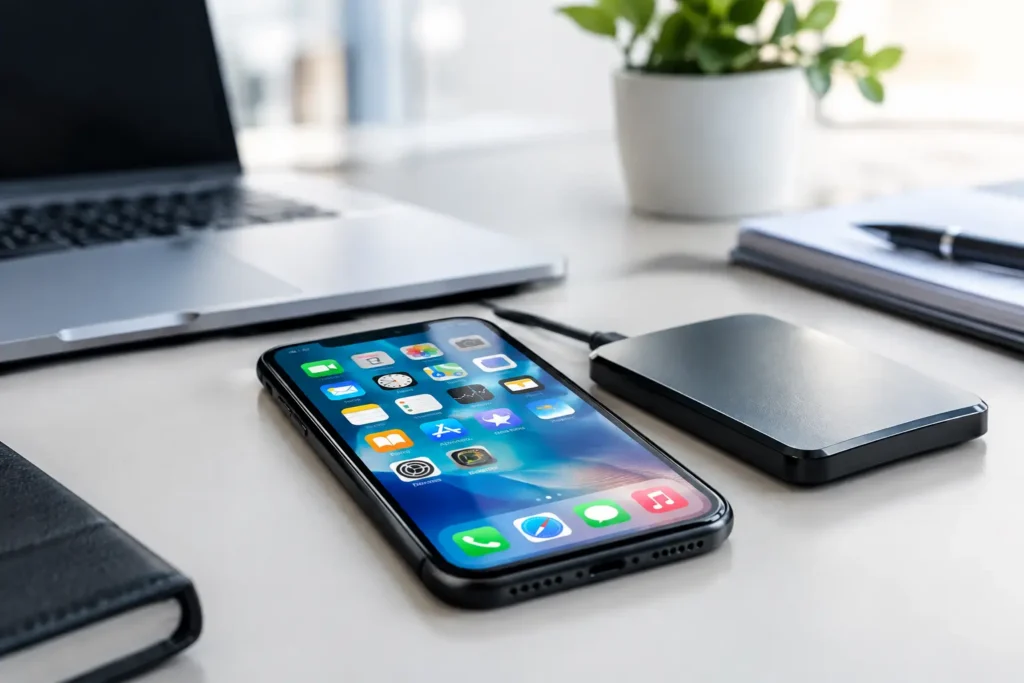
A single iPhone can hold the most consequential evidence in a matter: text messages with a key witness, photographs with embedded location data, documents shared through collaboration apps, or communications that never reached a corporate server. iPhone data collection is therefore not a routine device export. For litigation, investigations, and regulatory matters, it must preserve the right data, protect the original evidence, and create a record that can withstand scrutiny.
The challenge is that iPhone evidence is distributed. Some information resides on the device, some in iCloud, some in application accounts, and some in enterprise systems. A defensible collection begins by determining what exists, where it resides, and what collection method can reliably capture it without changing the evidence.
Why iPhone Data Collection Requires a Forensic Approach
Mobile devices are personal, portable, and constantly changing. A custodian may delete a message, install an update, disable a setting, or synchronize new content while a legal team is still assessing preservation obligations. Even ordinary activity can alter timestamps, application data, and available storage.
That is why collection should follow a documented forensic process rather than an informal request for screenshots or a manual transfer of selected files. Screenshots can be useful demonstratives, but they rarely capture full context, metadata, message threads, or proof of completeness. They also leave difficult questions: Who created them? When? What was omitted? Was the phone altered before or during capture?
A sound workflow addresses those questions from the start. It records device identifiers, condition, date and time of receipt, collection authority, examiner actions, tools used, and hash values where applicable. It also distinguishes between the evidence source and the working copy used for analysis and review.
Start With Preservation, Not Extraction
Before attempting an extraction, legal and technical teams should define the preservation objective. Is the matter focused on messages from a narrow date range? Does it involve alleged location activity, images, third-party app communications, or deleted data? Is the device company-owned, personally owned, or subject to a consent agreement or court order?
Those facts affect both scope and method. A narrowly tailored collection may reduce privacy exposure and review cost. A broader forensic acquisition may be warranted when the matter involves spoliation concerns, deleted content, or a need to examine device artifacts beyond user-visible communications.
The device should be secured promptly. Depending on the circumstances, that can include documenting its condition, recording visible notifications, maintaining power, isolating network access where appropriate, and preserving the passcode or account-access path through authorized channels. Teams should avoid improvising. Repeated unlock attempts, operating-system updates, or unplanned synchronization can create unnecessary risk.
Preservation also reaches beyond the handset. An iPhone backup, iCloud account, mobile carrier records, enterprise mobile-device-management logs, and data held by third-party applications may each contain relevant evidence. The most complete answer often comes from evaluating these sources together rather than assuming the phone itself is the entire record.
Choosing the Right Collection Method
There is no universal “full iPhone extraction.” The available methods depend on the device model, iOS version, security configuration, encryption state, available credentials, backup history, and legal authority. A defensible strategy explains what was collected, what was not available, and why.
Logical and backup-based collections
A logical or backup-based collection can capture substantial user data, including messages, call information, contacts, photos, certain application data, and device settings. When a current encrypted backup can be created or lawfully accessed, it may provide a practical, efficient source for many matters.
Its limitations matter. Backup contents vary by device configuration and application behavior. Some cloud-synchronized data may not be present locally, and some artifacts may not be available through a particular method. Collection documentation should identify the backup type, encryption status, date created, and data categories recovered.
File-system and advanced forensic collections
A file-system collection can provide broader access to device-resident artifacts when supported by the device and authorized collection conditions. This may be appropriate when investigators need to assess application databases, system artifacts, deleted-data indicators, or evidence not adequately captured in a standard backup.
Advanced collection is not automatically better. It can require more time, specialized tools, and closer consideration of proportionality and privacy. The right question is not whether to obtain the most expansive technically possible extraction. It is whether the method is justified by the issues, risks, and agreed scope of the matter.
Cloud and account-level preservation
For many custodians, iCloud is central to the evidence picture. Photos, notes, device backups, messages, and files may synchronize across devices or remain accessible through account-level sources. Application providers may also hold relevant content independently of the phone.
Cloud collection requires careful attention to authentication, consent, account ownership, data residency, and the possibility that account content has changed since the relevant period. A collection log should clearly separate device data from cloud data so reviewers and counsel understand the provenance of each item.
Chain of Custody Is Evidence, Too
A collection may contain relevant content and still become difficult to use if its handling cannot be explained. Chain of custody is the documented history of the evidence from receipt through processing, review, and production. It establishes who possessed the device or data, when control changed, what actions occurred, and how the material was protected.
For iPhone evidence, chain-of-custody records should be specific. Record the device make and model, serial number or other available identifiers, SIM and eSIM information when relevant, operating-system version, visible physical condition, power state, passcode handling protocol, and the collection location. Document each transfer, storage location, and examiner action.
Secure storage is equally important. Original devices and forensic images should be access-controlled, retained according to the engagement and legal hold requirements, and separated from review copies. If data moves into an eDiscovery platform, the transfer should preserve source information and make it possible to trace produced records back to the collected evidence.
Prepare Mobile Evidence for Review
Collection is only the first operational stage. Raw mobile data can be difficult for counsel to review because it may contain thousands of short messages, attachments, duplicate synced items, and fragmented conversations. The goal is to transform that data into a reviewable, searchable record without losing context.
Processing should normalize common mobile data types, preserve key metadata, and render conversations in a format that makes participants, dates, attachments, and message direction understandable. Attachments should remain associated with the message or communication that transmitted them whenever possible. A photograph may have little meaning without the message that explained why it was sent.
Analytics can reduce the burden further. Date filtering, custodian scoping, keyword analysis, conversation threading, near-duplicate identification, and targeted searches help legal teams focus on the material most likely to matter. These techniques should support, not replace, defensible review decisions. For example, a near-duplicate family can reduce repetitive review, but distinct metadata or message context may still require separate attention.
Redaction and production deserve the same discipline as collection. Mobile evidence frequently includes sensitive personal information, health data, financial details, unrelated communications, and privileged material. A review workflow should support controlled redactions, quality control, production specifications, and clear tracking of what was withheld or produced.
Common Mistakes That Create Risk
The most expensive problems usually begin with avoidable shortcuts. Asking a custodian to self-select “relevant” messages can omit unfavorable evidence and break conversation context. Capturing only screenshots makes authenticity and completeness harder to establish. Treating a cloud account as interchangeable with device content can obscure the source of the evidence.
Another frequent mistake is waiting too long to engage mobile-forensic support. By the time a dispute becomes active, devices may have been replaced, backups overwritten, accounts changed, or data deleted through ordinary use. Early scoping does not require collecting everything. It gives counsel a defensible basis for deciding what must be preserved and what can be proportionately targeted.
A Coordinated Path From Device to Production
The strongest iPhone collections connect forensic discipline with the broader eDiscovery workflow. Collection specialists should communicate with counsel about scope, privacy, and technical limitations. Processing teams should receive data with clear provenance. Review teams should see mobile communications in context, not as disconnected fragments. Production teams should be able to validate that the final deliverable tracks back to preserved evidence.
That coordination is especially valuable when an iPhone is one source among many, alongside email, cloud drives, collaboration platforms, laptops, and enterprise systems. ViewDox helps legal teams bring those sources into one managed workflow, pairing forensic collection with secure processing, analytics, review, and production support.
When a matter turns on what happened on a phone, the best next step is rarely “send us the screenshots.” Preserve the device, define the scope, document every handoff, and let the evidence tell its full story.