
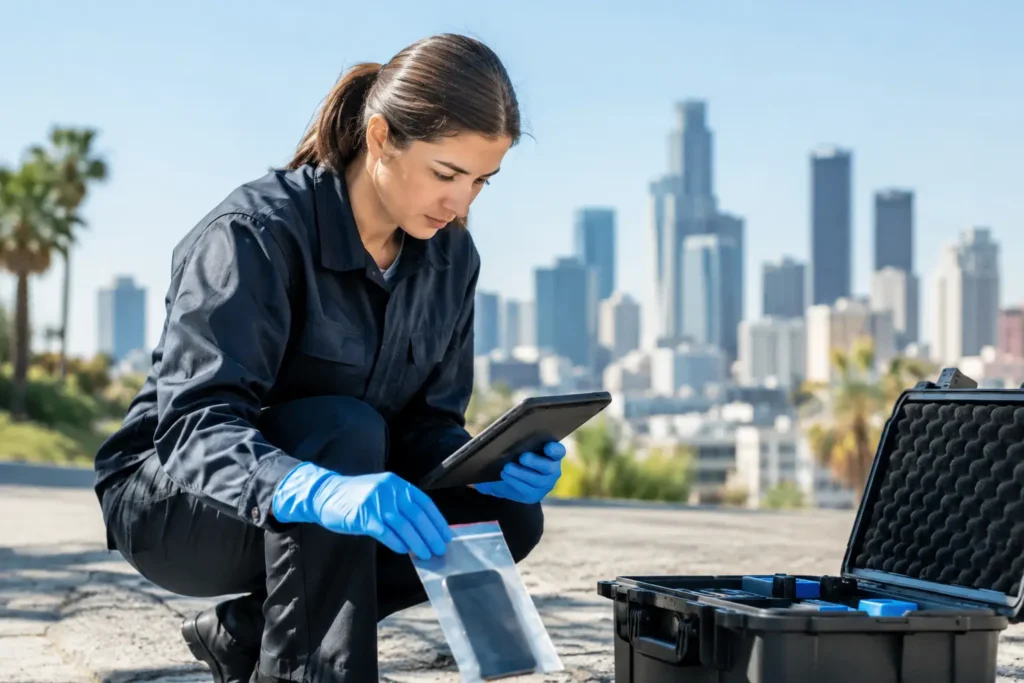
A preservation request can arrive before the legal team has identified every custodian, every device, or every cloud account involved. That is when the search for the best forensic data collection in Los Angeles becomes a practical risk decision, not a vendor comparison exercise. The right provider helps legal and corporate teams secure potentially relevant ESI quickly, document every action, and move collected data into review without creating avoidable cost or defensibility problems.
Forensic collection is more than copying files to an external drive. A defensible process must preserve metadata, account for system artifacts, maintain a documented chain of custody, protect sensitive information, and produce evidence that can withstand scrutiny from opposing counsel, regulators, or an internal investigation team. In Los Angeles matters, urgency often adds another layer of complexity: key custodians may be remote, data may sit across mobile devices and collaboration platforms, and counsel may need immediate visibility into what was collected.
What Defines the Best Forensic Data Collection in Los Angeles?
The best service is not necessarily the provider with the longest tool list or the lowest initial quote. It is the team that can match the collection method to the legal objective, data source, deadline, and risk profile of the matter.
A laptop collection for a commercial dispute may require a targeted, remotely executed acquisition with hash verification and clear collection reporting. A departing-employee investigation may call for a faster assessment of endpoint activity, external media use, personal cloud synchronization, and mobile-device evidence. A regulatory inquiry can require broader preservation, repeatable collection protocols, and a production-ready audit trail. These are different assignments, even when each starts with the same instruction: collect the data.
Experienced forensic professionals begin by clarifying the scope. They identify likely custodians, repositories, relevant time periods, legal holds, and the practical limits of each source. This early work prevents two expensive failures: overcollection that inflates processing and review costs, and undercollection that leaves a gap in the evidence record.
Collection must preserve evidence, not just content
Native files contain more than visible text. File-system dates, metadata, embedded properties, email routing information, and application artifacts can establish when information was created, modified, accessed, or transmitted. A collection approach that strips or changes this information may make a document easier to view, but less useful as evidence.
Forensic collection should use validated methods appropriate to the device or account at issue. The provider should be able to explain whether it is creating a forensic image, a logical collection, an export from a cloud platform, or a targeted acquisition. Each option involves trade-offs. A full image can preserve a wider range of artifacts but may take longer and collect more personal or irrelevant data. A targeted collection can be efficient and proportionate, but its scope must be documented carefully.
Chain of custody is an active process
A chain-of-custody form alone is not enough. Defensibility depends on whether the team can account for who handled the data, when it was transferred, where it was stored, how its integrity was verified, and what transformations occurred during processing.
Look for a provider that records collection details as work is performed, verifies data through hashing where applicable, and maintains controlled access throughout the matter. Secure storage, role-based permissions, encryption, and auditable activity records matter because evidence can be challenged long after the collection date.
Start With the Sources That Create the Most Risk
Legal teams often begin by asking for a computer image. That may be appropriate, but the most relevant data may be elsewhere. Modern matters commonly involve a combination of local endpoints, business email, cloud drives, chat platforms, mobile devices, text messages, external storage, and personal accounts used for business activity.
The challenge is not simply technical access. It is deciding what can be collected, what should be collected, and how to do so proportionately. Corporate counsel may need to balance preservation duties against employee privacy, contractual restrictions, cross-border concerns, and the risk of disrupting business operations.
Computers and external media
Workstations and laptops can contain local documents, browser history, cached cloud content, deleted-file artifacts, USB-device history, and application data that does not exist in a cloud export. When timing or user activity is disputed, these artifacts can be central to an investigation.
A qualified examiner should assess whether a full forensic image is warranted or whether a targeted collection meets the matter’s needs. The decision should be documented with input from counsel. Collecting everything by default can expand cost and privacy exposure; collecting too narrowly can miss evidence that explains what happened.
Mobile devices and text-based communications
Mobile devices present different evidentiary and privacy challenges. Relevant communications may include text messages, call logs, photos, messaging applications, location-related artifacts, or data from managed business applications. Device model, operating system, encryption status, and available backups affect what can be acquired.
A provider should communicate clearly about collection limitations rather than overpromise. Some data may be unavailable because it has been deleted, encrypted, overwritten, or never synchronized to an accessible account. A clear explanation of what was collected, what could not be collected, and why protects the integrity of the investigative record.
Cloud and collaboration platforms
Email and cloud repositories are often the highest-volume sources in civil litigation and subpoena response. A defensible cloud collection should preserve relevant metadata, folder context when needed, and a record of the source account and collection parameters. For collaboration tools, teams may need messages, attachments, edits, reactions, channel context, and direct-message content.
The useful question is not whether a provider can access a platform. It is whether collected data can be efficiently processed, searched, reviewed, and produced without repeated handoffs between unrelated vendors.
Why Collection and eDiscovery Should Work Together
Fragmented workflows introduce delay and risk. One company collects a device, another processes the data, a third hosts it, and a fourth manages production. At every transfer, the project team must reconcile naming conventions, chain-of-custody records, processing settings, file exceptions, and billing models.
An integrated workflow connects collection to the next legal decision. After data is acquired and securely uploaded, it should move into processing with the right de-duplication, date filtering, search, and analytics strategy. Email threading and near-duplicate identification can reduce repetitive review work while preserving the ability to trace documents back to their source.
This does not mean every matter requires the same technology or level of analysis. A narrowly scoped employment matter may benefit from targeted processing and early case assessment. A large commercial dispute may warrant more advanced analytics, structured review workflows, redaction controls, and quality-control reporting. The advantage of an end-to-end provider is not a one-size-fits-all platform. It is having specialists who can adjust the workflow without losing control of the evidence.
ViewDox combines certified forensic collection with managed eDiscovery services so legal teams can move from preservation through production under coordinated project guidance. That continuity helps reduce unnecessary data movement and gives counsel a clearer view of scope, cost, and review readiness.
Questions to Ask Before You Engage a Forensic Provider
Before engaging a provider, counsel and legal operations leaders should ask practical questions that reveal how the team will perform under pressure. Can the provider collect from the relevant computers, mobile devices, and cloud sources? Can it support remote collections without compromising documentation or data security? Who will communicate with custodians and coordinate with internal IT? How quickly can the data be processed and made available for legal review?
Ask for clarity on reporting as well. A useful collection report identifies the custodian, device or account, collection date and method, data volume, integrity verification, and any exceptions. For investigation matters, ask whether the examiner can explain technical findings in language that attorneys, executives, and fact finders can understand.
Cost transparency deserves equal attention. Low collection pricing can become expensive when data is sent into an inefficient downstream workflow. Request an estimate that considers collection, transfer, processing, hosting, project management, and production. More importantly, ask what steps the provider will take to reduce avoidable volume before reviewers begin opening documents.
Make the First Collection Decision Defensible
The quality of a matter’s evidence record is often determined in the first days, when legal teams are preserving sources, interviewing custodians, and choosing a collection path. Speed matters, but speed without documentation can create a problem that no later review platform can repair.
Choose a Los Angeles forensic data collection partner that treats each source as evidence, each handoff as accountable, and each next step as part of the legal strategy. When the collection plan is scoped carefully and connected to an intelligent review workflow, counsel can spend less time reconstructing what happened to the data and more time evaluating what the evidence says.