
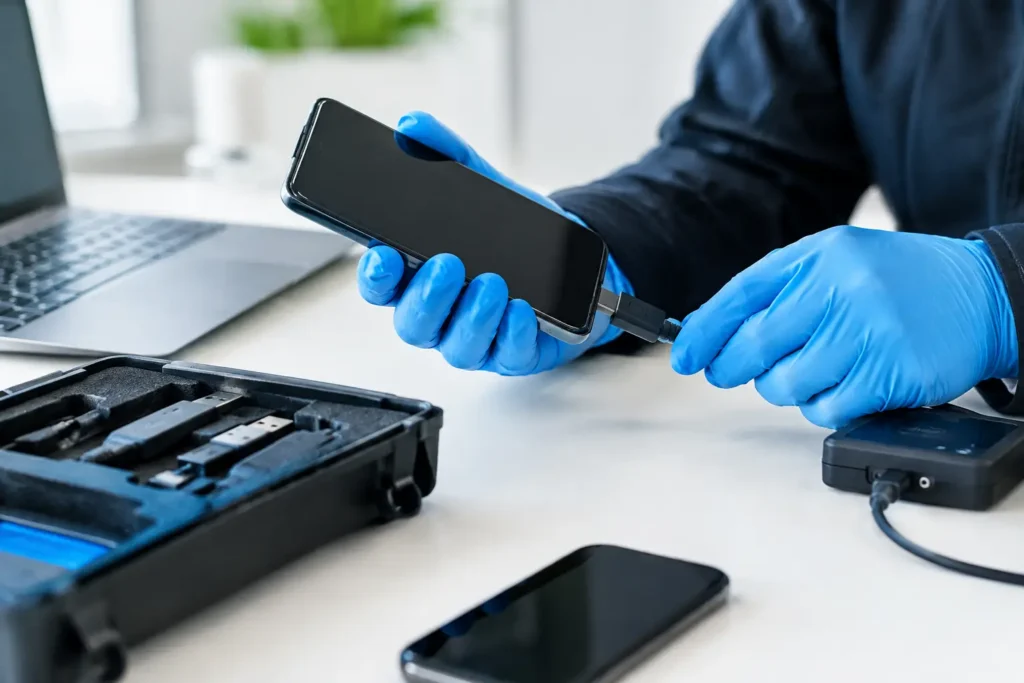
A phone can contain the most direct record of what happened: the message sent before a contract dispute, the location history relevant to an internal investigation, or the photograph that never reached a corporate system. Mobile device forensic collection turns that volatile, highly personal data into evidence that can be authenticated, preserved, reviewed, and produced with confidence.
For legal and corporate teams, the challenge is rarely whether a mobile device contains relevant electronically stored information. The challenge is collecting it without altering the source, exceeding the scope of a preservation obligation, exposing private data unnecessarily, or creating a chain-of-custody problem that surfaces when the matter is under pressure.
Why Mobile Evidence Requires a Different Collection Strategy
Mobile devices are not simply smaller computers. They are constantly changing environments connected to cellular networks, Wi-Fi, cloud services, enterprise applications, wearable devices, and personal accounts. A text message may be retained on the device, synchronized to a cloud account, included in a backup, or missing from one source while available in another. The same is true of chat applications, photos, documents, location artifacts, call history, and social media activity.
That complexity makes informal collection risky. Asking a custodian to email screenshots, forward messages, or export selected files may be appropriate for a narrow, low-risk request. It is generally not a substitute for a forensic workflow where authenticity, completeness, and metadata matter. Screenshots can omit context, lack usable metadata, and fail to capture deleted or hidden information. Manual exports can also change timestamps, leave out attachments, or provide no reliable record of how the information was obtained.
The right approach depends on the device, operating system, security settings, legal scope, and urgency. A company-issued Android device subject to mobile device management presents a different collection path from an employee-owned iPhone that contains potentially responsive business communications alongside deeply personal information. A defensible plan recognizes those distinctions before someone starts tapping through the device.
Mobile Device Forensic Collection Starts With Preservation
The most valuable evidence can disappear quickly. Messages may be deleted, applications may update, cloud retention settings may change, and a device may be reset, lost, or replaced. Once a litigation hold, subpoena, investigation, or regulatory inquiry creates a duty to preserve, the first objective is to stabilize the relevant sources.
That does not always mean immediately seizing a device. In many matters, proportionality, employee privacy, business continuity, and jurisdictional requirements call for a targeted collection protocol. Counsel and forensic specialists should identify the likely custodians, relevant date ranges, communication channels, device ownership, and connected accounts. This scoping work helps reduce overcollection while preserving the evidence needed for the matter.
Preservation also requires practical device handling. A device may need to be isolated from networks to prevent remote wiping or synchronization changes. Its condition should be documented, including visible damage, lock status, time displayed, identifying information, and installed storage media where applicable. Each transfer of custody should be recorded. These details may seem routine at the outset, but they provide the foundation for later testimony about what was collected and how it was protected.
Collection Methods Must Match the Evidence and Risk
Forensic examiners may use logical, file-system, or physical acquisition methods, among other approaches. A logical acquisition can collect data made available through the device operating system or a supported interface. It can be efficient and appropriately tailored in many civil matters, but it may not capture all artifacts or deleted data.
A file-system acquisition can provide a deeper view of files, databases, and application content when the device and available tooling permit it. Physical acquisition seeks a lower-level copy of device storage and can be useful in certain investigations, although modern encryption, hardware protections, and operating-system changes often limit what is possible. There is no single collection method that is best for every matter.
Cloud collection may be equally important. Many users rely on synchronized accounts for messages, photos, files, notes, email, and backups. Collecting only the handset can leave meaningful gaps. Conversely, collecting a cloud account without examining the device may miss locally stored data, application artifacts, or relevant device-specific context. Experienced forensic guidance helps determine which sources can answer the legal question without collecting far more than necessary.
Chain of Custody Is More Than a Form
A defensible chain of custody is an unbroken, documented account of where evidence came from, who handled it, what was done to it, and how it was stored. For mobile evidence, that record should connect the specific device or account to the collection process, the resulting forensic image or export, the verification steps performed, and the evidence delivered for downstream review.
Hash values are a critical part of this process when applicable. They help demonstrate that a forensic image or collected data set has not changed after acquisition. Examiner notes, collection logs, tool versions, error reports, photographs, and secure storage records further support repeatability and transparency.
The goal is not paperwork for its own sake. It is to enable counsel, opposing experts, regulators, and the court to understand the collection process and assess its reliability. If a collection method had limits, those limits should be documented rather than obscured. A clear record of what could and could not be acquired is more credible than an unsupported claim that a device was fully captured.
Privacy and Proportionality Cannot Be Afterthoughts
Mobile devices often blur the line between business and personal life. They can hold health information, family communications, financial records, location data, privileged materials, and credentials for unrelated accounts. In a bring-your-own-device environment, a broad collection can create substantial privacy and employee-relations concerns.
A well-designed protocol addresses those concerns at the beginning. It may use date filters, application-specific targeting, agreed search terms, neutral review processes, or segregation of personal content. The precise safeguards will depend on the matter, governing law, employment policies, collective bargaining obligations, and any negotiated discovery protocol.
Security is equally central. Collected data should move through encrypted channels and controlled repositories with role-based access. Teams need to know who can view the source data, who can access processed documents, and how long data will be retained. Sensitive evidence should not sit in ad hoc file shares, personal drives, or untracked transfer tools simply because the collection was urgent.
From Collection to Review Without Breaking the Workflow
A forensic collection has limited value if the resulting data cannot move efficiently into the eDiscovery process. Mobile evidence often arrives in formats that require normalization, extraction, indexing, and careful rendering before legal teams can review it effectively.
Text conversations need participant names, timestamps, attachments, and message context. Chat data may need to be organized by thread. Photos and videos may require metadata extraction and reviewable renditions. Application databases can contain records that are technically available but difficult to interpret without forensic expertise. The transition from forensic evidence to review evidence must preserve provenance while making the data usable for attorneys and investigators.
An integrated workflow reduces unnecessary handling. After secure collection, data can be uploaded, processed, deduplicated where appropriate, analyzed, and loaded for review. Email threading, near-duplicate identification, search, tagging, redaction, and production tools can then help legal teams focus on the material that matters. The benefit is not merely speed. It is fewer handoffs, clearer accountability, and less risk that evidence context is lost between providers.
For matters involving multiple custodians, early case assessment can reveal whether mobile data is central to the dispute or only marginally relevant. That information supports better decisions about review staffing, budget, production format, and whether additional collection is warranted. It also helps prevent the familiar problem of discovering a critical mobile source after document review is already underway.
Questions to Resolve Before Collecting a Device
Before a collection begins, legal and investigative teams should be able to answer several practical questions: Who owns and controls the device? What data sources are potentially relevant? Is there a preservation obligation or consent requirement? Does the device contain privileged or personal information? Are cloud accounts, backups, or enterprise collaboration platforms in scope? And what level of forensic detail is necessary for the matter?
These questions determine whether a targeted extraction, a broader forensic acquisition, cloud preservation, or a combination is appropriate. They also establish expectations with custodians. Clear communication can reduce resistance, protect privacy interests, and prevent a well-intended employee from altering evidence while trying to help.
ViewDox approaches mobile evidence as part of the full ESI lifecycle, not as an isolated technical event. Certified forensic collection, secure data handling, processing, analytics, review support, and production should work together under a documented plan built for the facts of the matter.
The best time to make that plan is before a device becomes inaccessible, overwritten, or contested. When mobile data may matter, a focused, defensible collection strategy gives the legal team room to investigate the facts instead of explaining avoidable gaps in the record.
Recent Comments