
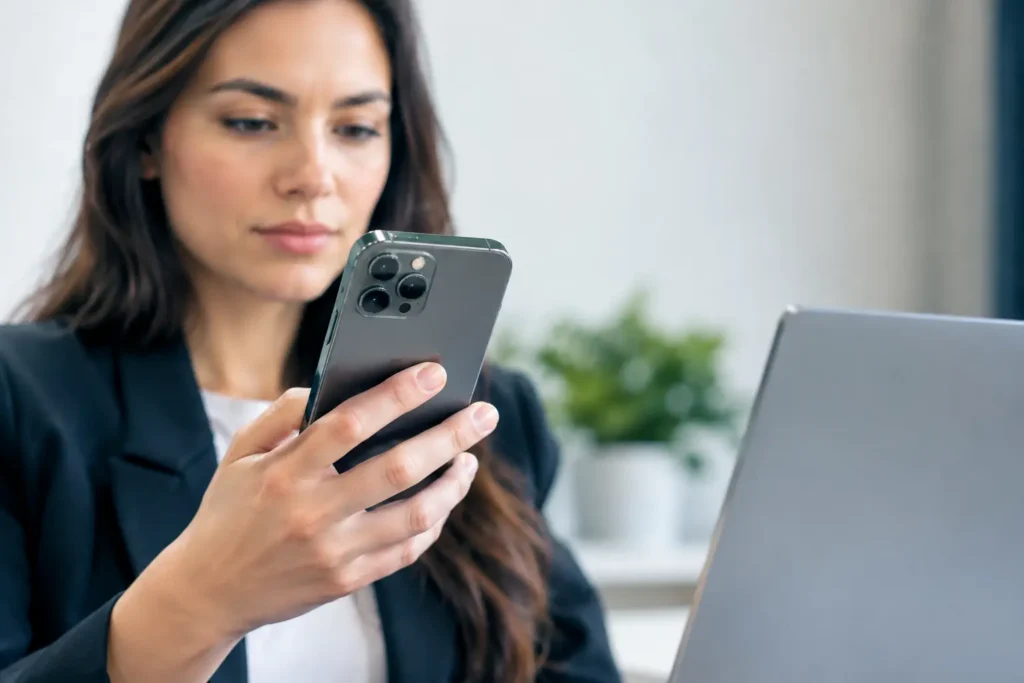
An iPhone can hold the message that changes a case, the photo that confirms a timeline, or the business chat that never reached a company server. When a custodian is across the country, counsel often asks: can my vendor collect my iPhone data remotely? The practical answer is yes, in some circumstances, but a remote collection is not the same as a complete forensic acquisition. The right method depends on the data source, the device model and iOS version, the custodian’s cooperation, and the level of preservation and authentication your matter requires.
For litigation, investigations, subpoenas, and regulatory responses, the question is not simply whether data can be obtained. It is whether the collection method is proportionate, secure, repeatable, and defensible when challenged.
Can My Vendor Collect My iPhone Data Remotely? It Depends
A qualified forensic vendor may be able to remotely acquire certain iPhone-related data, particularly data that is synchronized to cloud services, stored in an accessible backup, or available through an approved enterprise management environment. Remote workflows can reduce travel, speed up preservation, and lower disruption for a custodian.
However, Apple’s security architecture places meaningful limits on what can be collected without physical access to the device. Modern iPhones use hardware-backed encryption, and many artifacts are protected by the device passcode and the device’s current security state. A vendor generally cannot remotely obtain a full forensic image of a current iPhone in the way it may collect a laptop hard drive.
That distinction should shape the collection plan. A remote approach may be entirely appropriate for a narrow request involving cloud-synced messages or business data. It may be insufficient when the matter requires deleted artifacts, device-level metadata, application databases, location evidence, or a broad examination of the handset itself.
What a Remote iPhone Collection Can Capture
Remote collection is usually about acquiring available data from a defined source, not taking control of the phone. Depending on the circumstances, a vendor may help preserve iCloud-synchronized content, available cloud backups, files held in collaboration applications, email, photos, contacts, calendars, or data stored in a corporate mobile-device-management environment.
The available scope varies substantially. For example, a custodian’s iCloud account may contain synchronized content that is not present in a local backup. Conversely, some data may exist only on the handset, only within a particular application, or only in a backup created before the relevant period. End-to-end encrypted services, application-specific retention settings, and changes in Apple account configuration can further limit collection.
A defensible remote workflow commonly requires the custodian to participate in authentication. Multi-factor authentication, a trusted device prompt, or account recovery steps may be necessary. That is not a weakness in the process. It is an expected security control, and the collection record should identify who provided access, when access was authorized, and what source was acquired.
Enterprise-managed iPhones Are Different
Corporate-owned or managed iPhones can offer another path. If the organization uses mobile device management, its administrator may have access to business application data, configuration records, compliance information, or managed account content. This can be valuable for scoping and preservation.
Still, MDM is not a forensic extraction tool. It may show that a device was enrolled, identify installed managed applications, or support a remote preservation action, but it does not automatically provide the complete contents of personal texts, private photos, or third-party application data. Legal teams should avoid assuming that a company’s administrative control over a device equals access to all potentially relevant ESI.
What Remote Collection Usually Cannot Do
The most consequential limitations involve data that resides only on the device. A remote collection may not recover all local databases, deleted material, application cache files, system artifacts, device logs, or metadata needed to explain how and when a record was created or modified.
Remote methods also may not establish the same level of device condition documentation available during an in-person forensic examination. If the case turns on whether a message was edited, whether a photograph was captured on the phone, or whether a particular application was used at a specific time, physical handling may be warranted.
A vendor should be candid about these boundaries. Promising a complete collection where only cloud-based or user-exported data is available creates avoidable risk. The goal is to match the collection method to the evidentiary question, document known gaps, and preserve additional sources before they are overwritten or changed.
Choosing Between Remote and Physical Collection
Remote collection is often the right first move when time is short, custodians are distributed, and the likely evidence is cloud-based. It can also be effective when the legal request is narrowly tailored or when the organization needs to preserve accessible content while arranging a more comprehensive examination.
Physical collection is generally stronger when the iPhone itself is central evidence, when data may exist only locally, or when the matter involves allegations of deletion, spoliation, misconduct, or data exfiltration. It may also be preferable when counsel expects close scrutiny of chain of custody or needs an examiner to evaluate device state, installed applications, and available artifacts directly.
The decision should not be framed as remote versus physical in absolute terms. A staged plan is frequently more efficient: preserve relevant cloud sources promptly, collect enterprise data where appropriate, then perform a targeted physical acquisition of high-risk or high-value devices. This approach can reduce delay without overstating what the first collection captured.
Build a Defensible Remote Collection Process
Forensic rigor begins before credentials are entered or data is downloaded. Counsel and the collection team should define the legal purpose, custodians, relevant date range, likely applications, account ownership, and expected data locations. That early scoping determines whether remote collection is suitable and helps prevent unnecessary acquisition of personal content.
The process should document authorization and consent, especially for personally owned devices. Organizations should confirm the applicable policies, employment agreements, privacy obligations, and jurisdiction-specific requirements before collecting employee mobile data. A technically possible collection is not automatically a legally appropriate one.
During collection, the vendor should preserve contemporaneous records of the source, method, date and time, operator, account identifiers, authentication events, collection settings, and any errors or limitations encountered. Where supported, cryptographic hashes and validation procedures help demonstrate that acquired data has not changed after collection.
Secure handling matters just as much after acquisition. Mobile evidence can include privileged communications, health information, financial data, personal photographs, and confidential business records. Data should move through controlled transfer channels, be stored in a restricted environment, and be processed with appropriate access controls. From there, the legal team can apply date filters, search terms, analytics, threading, and review workflows without repeatedly touching the original source.
Ask the Vendor Specific Questions
Before authorizing a remote iPhone collection, ask what data source will be collected and what the method cannot obtain. Ask whether the workflow preserves original metadata, produces a collection log, supports chain-of-custody documentation, and identifies errors or unavailable content. Also ask how credentials and collected data are protected, who can access them, and whether the resulting data can move directly into review and production.
These questions separate a convenient export from a managed evidence-collection process. They also give counsel a clear record for discussions with opposing parties, regulators, or the court.
The Best Answer Is a Collection Plan, Not a Yes or No
An iPhone should not be treated as a black box, nor should it be treated as a simple cloud account. Its data may be divided among the handset, iCloud, business applications, backups, and third-party services, each with different technical and legal constraints.
ViewDox approaches mobile evidence with that distinction in mind: identify the source, preserve what is available, document the method, and align the collection with the matter’s actual risk. When remote acquisition is appropriate, it can provide a fast and cost-conscious path to relevant ESI. When the evidence requires more, recognizing that early protects both the record and the case.
The most useful next step is to assess the device, accounts, and allegations before data begins to disappear. A focused scoping conversation can turn an uncertain iPhone request into a collection plan that is secure, proportionate, and ready to withstand scrutiny.